
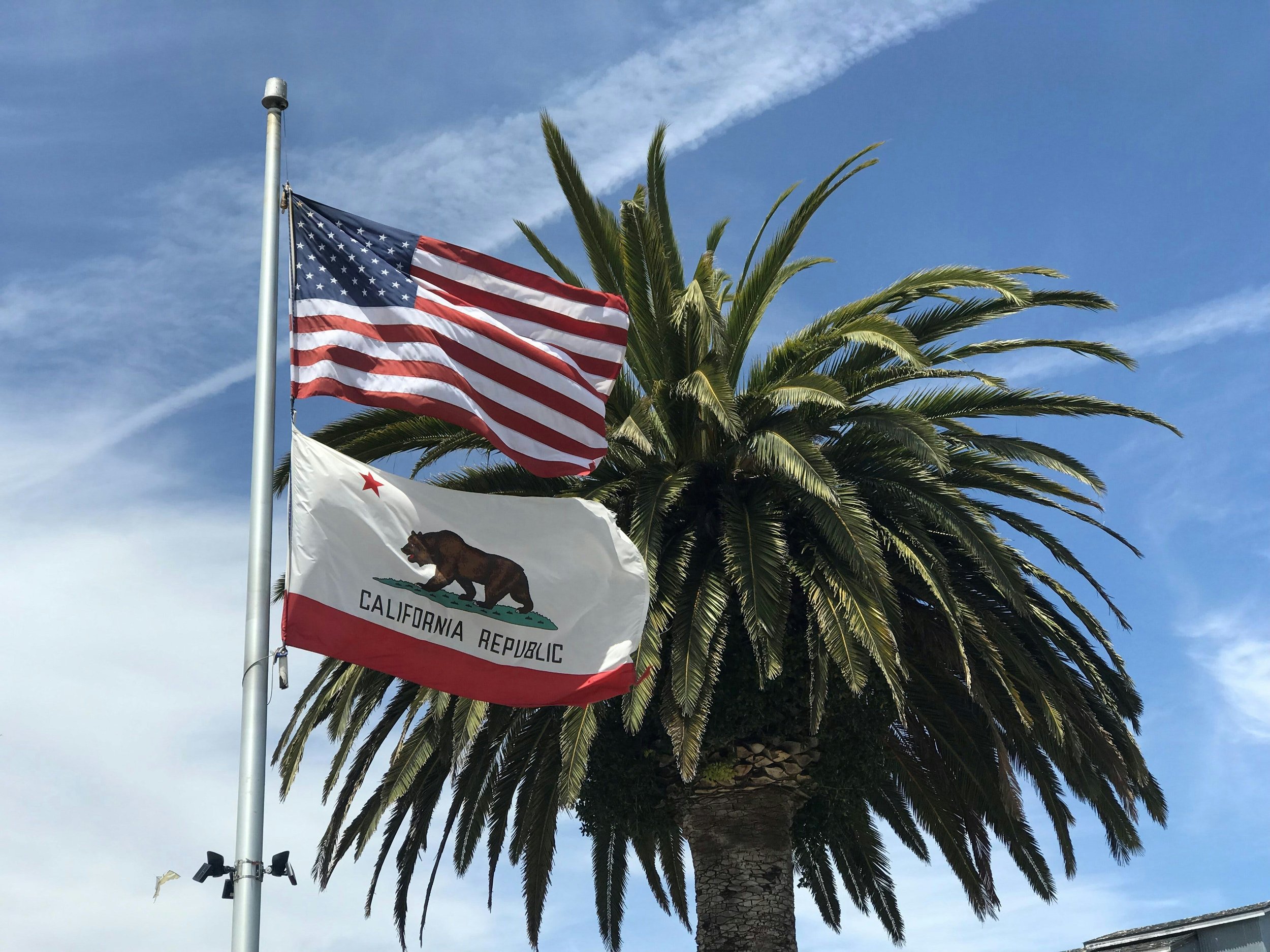
Federalism symbolized. Photo by Tina Chelidze on Unsplash.
When Benjamin Franklin walked out of the Constitutional Convention in 1787, a woman asked what kind of government the delegates had produced. His reply — "A republic, if you can keep it" — is one of the most quoted lines in American political history. For Richard E. Wagner, it may also be the most telling verdict on where we stand today.
In a wide-ranging new interview with Garrett Brown for the Mercatus Center's Humane Pursuits Substack, Wagner — one of the foremost scholars in public choice and constitutional political economy — takes stock of American federalism: what it was designed to do, how it has unraveled, and what that unraveling tells us about the political economy we now inhabit.
The conversation is essential reading for anyone engaged with the entangled political economy research program.
Federalism Is Not Decentralization
Wagner begins with a clarification that matters more than it might seem. Federalism, properly understood, is not simply a national government delegating authority downward. It requires two genuinely autonomous levels of government, each capable of independent action — taxing, regulating, governing — without taking orders from the other. Decentralization, by contrast, is a bureaucratic arrangement: states as branch offices executing instructions from Washington.
That distinction carries real weight. A decentralized system gives the appearance of local governance while concentrating ultimate authority at the top. A federal system — in theory — creates genuine competition between jurisdictions and limits what any single level of government can do.
In practice, Wagner argues, the United States has drifted decisively from the latter toward the former.
Constitutional Drift and the General Welfare Clause
How does a constitutional order erode without anyone formally repealing it? Wagner's answer involves what he calls constitutional drift — the gradual reinterpretation of foundational provisions until they mean nearly the opposite of what they originally said.
The General Welfare Clause is his sharpest illustration. He recounts the early history of congressional appropriations, when members like Davy Crockett would argue that relief for drought-stricken Ohio farmers — however sympathetic — simply wasn't a constitutional use of federal funds. The votes to reject such appropriations became narrower decade by decade until, by the New Deal era, the general welfare had become whatever Congress declared it to be. No amendment was needed. The parchment stayed the same; the politics changed everything.
This is precisely the dynamic the entangled political economy framework is built to analyze. Formal constitutional rules do not govern themselves. They are operated by people with interests, ambitions, and career incentives — people who, over time, find ways to expand their authority whether or not the text invites it.
The Faustian Bargain and the Moral Foundations of Self-Government
Some of the interview's richest material concerns what Wagner, following Vincent Ostrom, calls the Faustian bargain at the heart of all government: the deliberate insertion of an instrument capable of coercion into social life, in the hope that more good than evil results — with no guarantee that it will.
Wagner argues that the American Founders understood this deeply. The Federalist and Anti-Federalist debates, for all their disagreements, shared a common premise: government is a necessary evil, not a positive good. That shared moral imagination produced a constitutional architecture designed to contain what it created.
What has changed, Wagner suggests, is the moral imagination itself. A society in which government accounts for roughly half of all economic activity — compared to around 10 percent in 1900 — is one where citizens encounter political authority not as a constrained and somewhat suspicious instrument, but as the primary medium through which social life is organized. The Faustian sensibility has not disappeared, but it no longer shapes institutional design the way it once did.
Entanglement as a Central Theme
For readers of this network, one passage in particular stands out. Wagner describes the transformation of the political economy this way: at the time of the Founding, politicians were like stagehands — necessary to keep the production running, but not participants in the drama itself. Ordinary citizens, operating through markets and civil society, were the real actors. Over the course of the Progressive Era and beyond, the stagehands walked onto the stage. Politics became entangled with commerce, and commerce with politics, in the mutually reinforcing patterns of rent-seeking and regulatory capture that define so much of contemporary governance.
This is not merely a metaphor. It is a diagnosis of the structural shift that the entangled political economy framework exists to theorize and explain.
A Conversation Worth Your Time
The interview also covers the Anti-Federalists' overlooked case for genuine sovereignty at the state level, the significance of the Seventeenth Amendment's shift to direct election of senators, Switzerland as a more durable model of confederal governance, and the question of whether federalism can survive at the scale of a 350-million-person republic.
Wagner closes on a note that is sobering but not dismissive: federalism remains a worthy aspiration and a crucial piece of constitutional design, but its survival depends less on formal arrangements than on the moral imaginations citizens bring to self-governance. Structures without the right animating values are, as he puts it, just words on parchment.
Read the full interview at Humane Pursuits: Richard E. Wagner on the Rise and Limits of American Federalism
